
Classification against Hybridity
Science Fiction, Fantasy and Horror Genre and Rating GuideThis flow traces how the code system confronts works that cross conventional genre boundaries.
increasing Bearing strength in each event
 decreasing
Bearing strength in each eventdecreasingMixed Signals
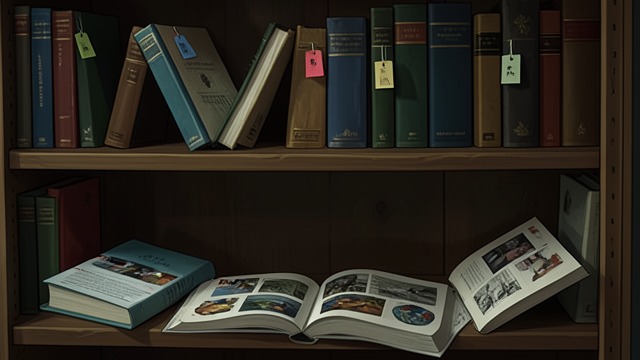
Works Between Shelves
Blurred Boundaries
Many speculative works combine scientific speculation, supernatural elements, horror, fantasy, mystery, or adventure. A single label may fail to represent their full movement.
Practical Necessity
Nevertheless, readers need some orientation. The guide must choose a dominant signal even when the work exceeds it.
Classification begins as an unavoidable compromise.
Flexible Codes
Allowing Overlap
Multiple Possibilities
The range of genre codes provides more room than a simple science-fiction-versus-fantasy division. It acknowledges supernatural, speculative, heroic, and detective modes.
Interpretive Openness
The code suggests a route rather than imposing a complete interpretation. Readers can use it as a starting point and revise their understanding while reading.
The system survives hybridity by remaining functional rather than absolute.
Hybrid Reading Accepted
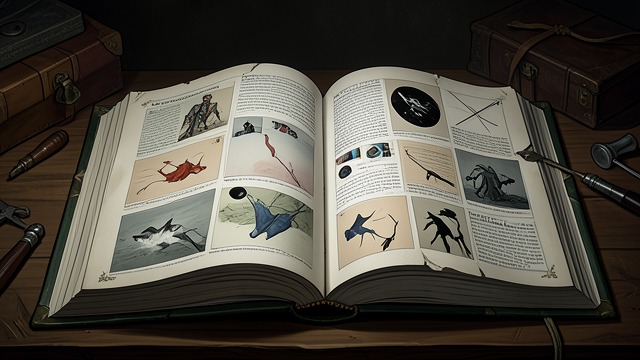
Beyond the Label
Categories as Tools
The final lesson is that categories help readers begin but cannot finish interpretation. A mixed work may belong productively to several conversations.
Genre as Movement
The guide's broad vocabulary permits literature to travel between traditions without losing its identity.
The conflict resolves through acceptance of movement and overlap.
when hybrid entries appear
during the middle classification examples
near the guide's conclusion
